 Dunnebacke Constructors
Grading · Drainage · Erosion Control · Middle TN
Free Estimates · Call Now
(615) 887-1194
Dunnebacke Constructors
Grading · Drainage · Erosion Control · Middle TN
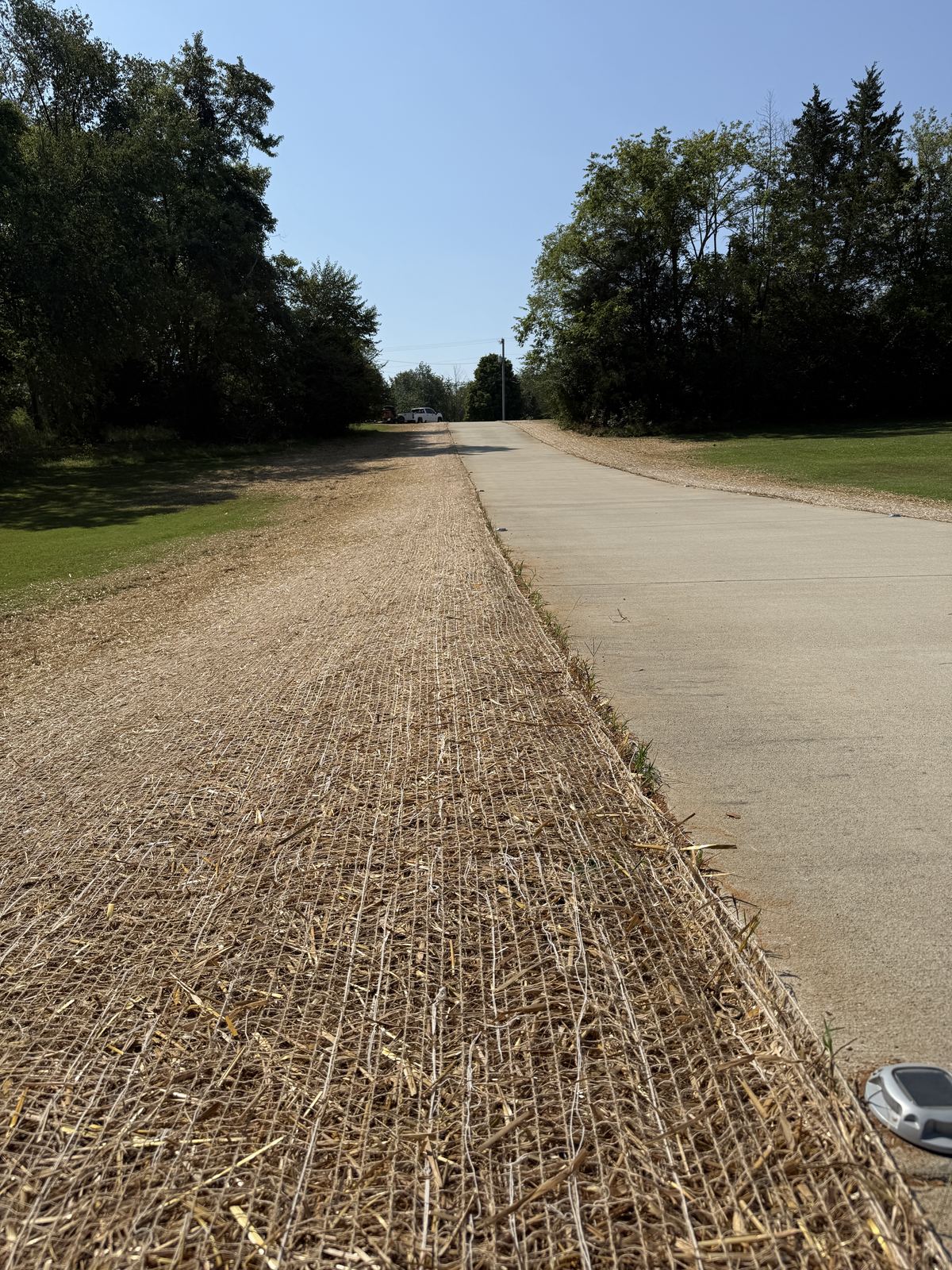
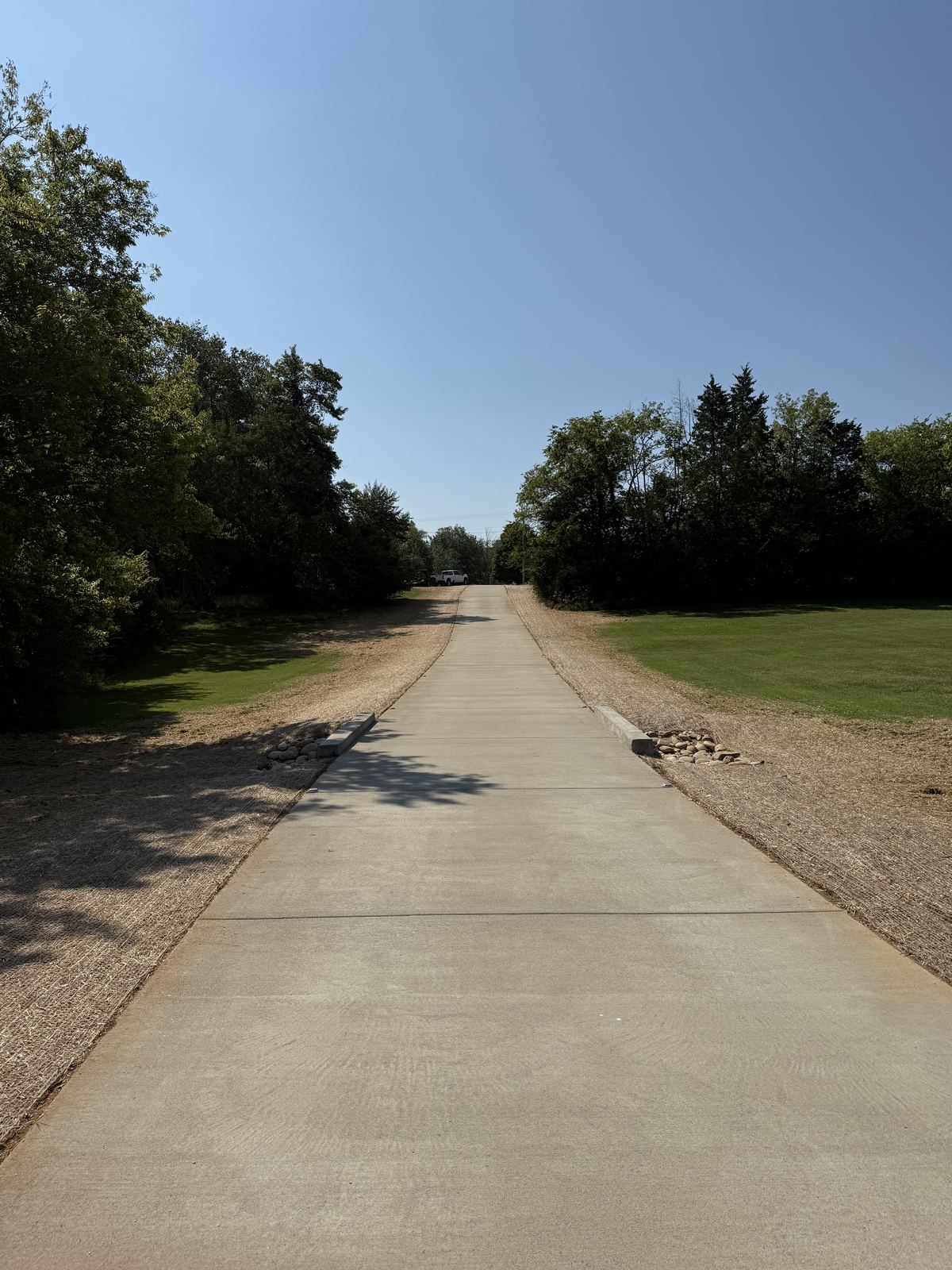
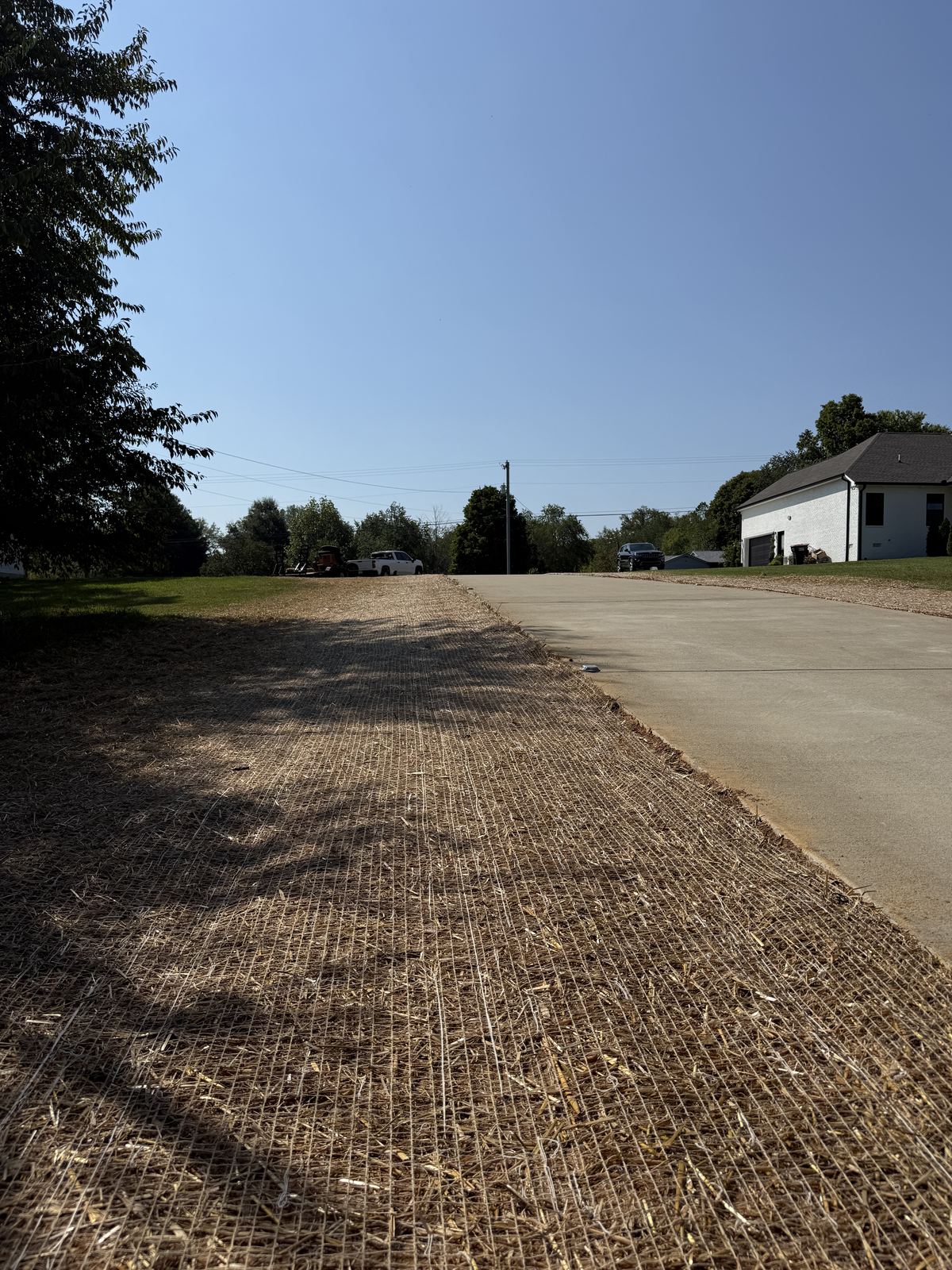
The concrete was poured and the finishers were gone — but the yard on both sides still sat inches below the slab, leaving a raw edge the full length of the drive. We brought the ground back up to the concrete along roughly 500 feet of driveway with five loads of good topsoil, seeded it, laid BioNet erosion matting, and blew straw. At the two crossover pipes, we tore out poured concrete that was sloped wrong, regraded the outlets, and armored them with 7–14″ Pigeon River rock.
Most concrete companies don't grade back up to the driveway when they're done. It isn't really their trade. They set forms, pour, finish, pull the forms, and leave — and when the forms come out, the edge of the slab is standing proud of the ground, with a strip of loose fill and bare dirt beside it.
That gap is more than a looks problem. An exposed edge has nothing supporting it from the side, so it's more likely to chip or crack if a tire drops off it. Mowers scalp it. And every rain runs along that low strip beside the concrete, carrying soil with it and slowly undermining the slab you just paid for. On a long drive like this one, that's 500 feet of edge on each side waiting to wash.
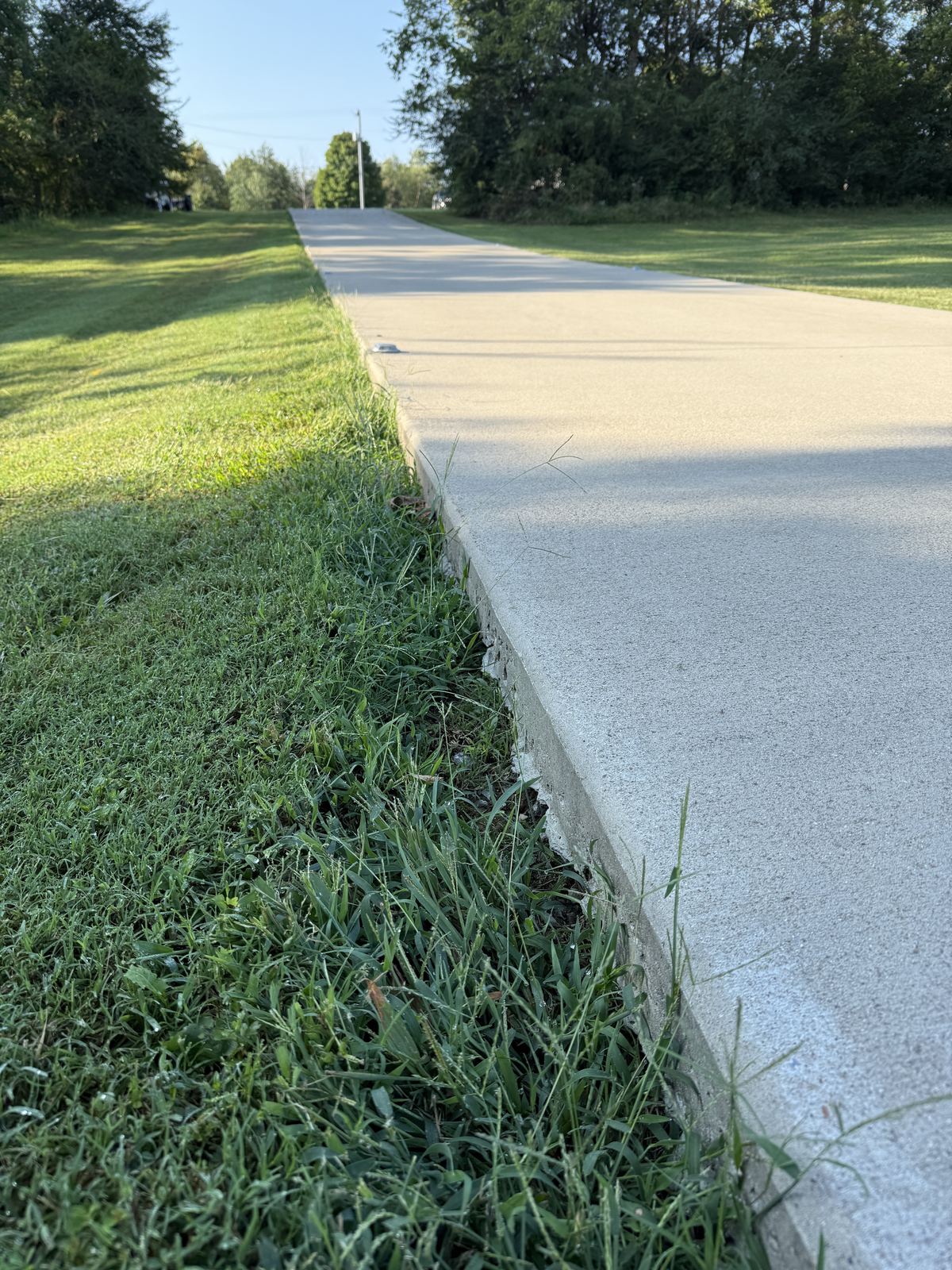
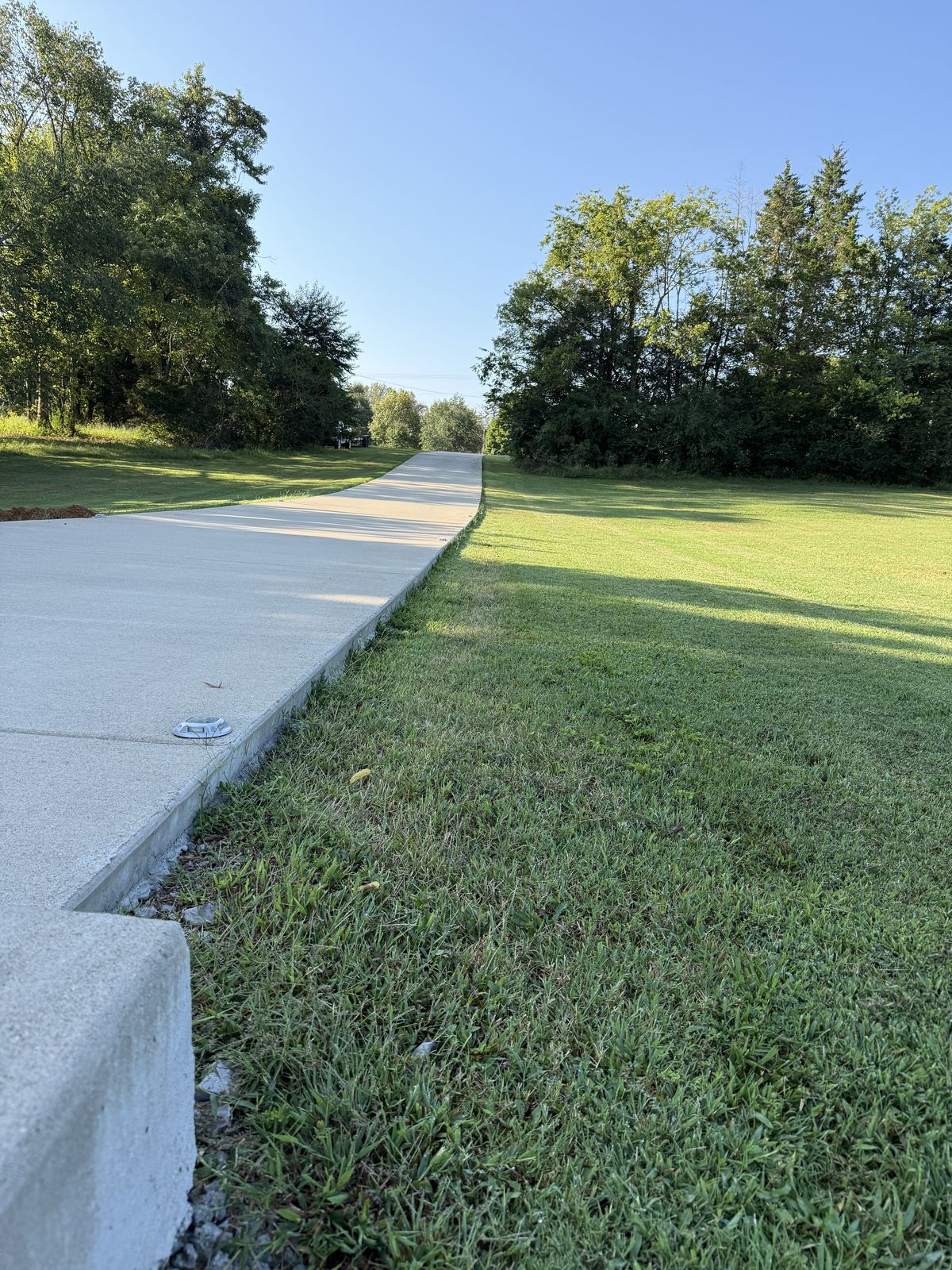
The goal of a driveway grade-out is simple: the ground should meet the top of the concrete and then fall away from it, so water sheds off the slab and away from the edge instead of running alongside it. Getting there on 500 feet takes material, a machine that can work a clean edge, and follow-through on the erosion control so the new dirt is still there after the first storm.
We hauled in five loads of good topsoil — not fill, not rock-and-clay spoil — and spread it along both sides of the drive. Grass has to grow in this strip, and it won't establish in the compacted subsoil a concrete crew leaves behind.
With a compact track loader we brought the topsoil flush with the top of the slab and feathered it back into the existing yard, pitching it away from the concrete so rain runs off the drive and out into the lawn instead of along the edge.
The fresh topsoil was seeded, then covered with BioNet erosion control matting — a biodegradable blanket that holds seed and soil in place while the grass roots in, then breaks down on its own. On a long, open run like this, matting is the difference between a green edge and a washed-out ditch.
We finished by blowing straw over the disturbed areas to hold moisture for germination and knock down raindrop impact on the bare soil until the grass takes over.
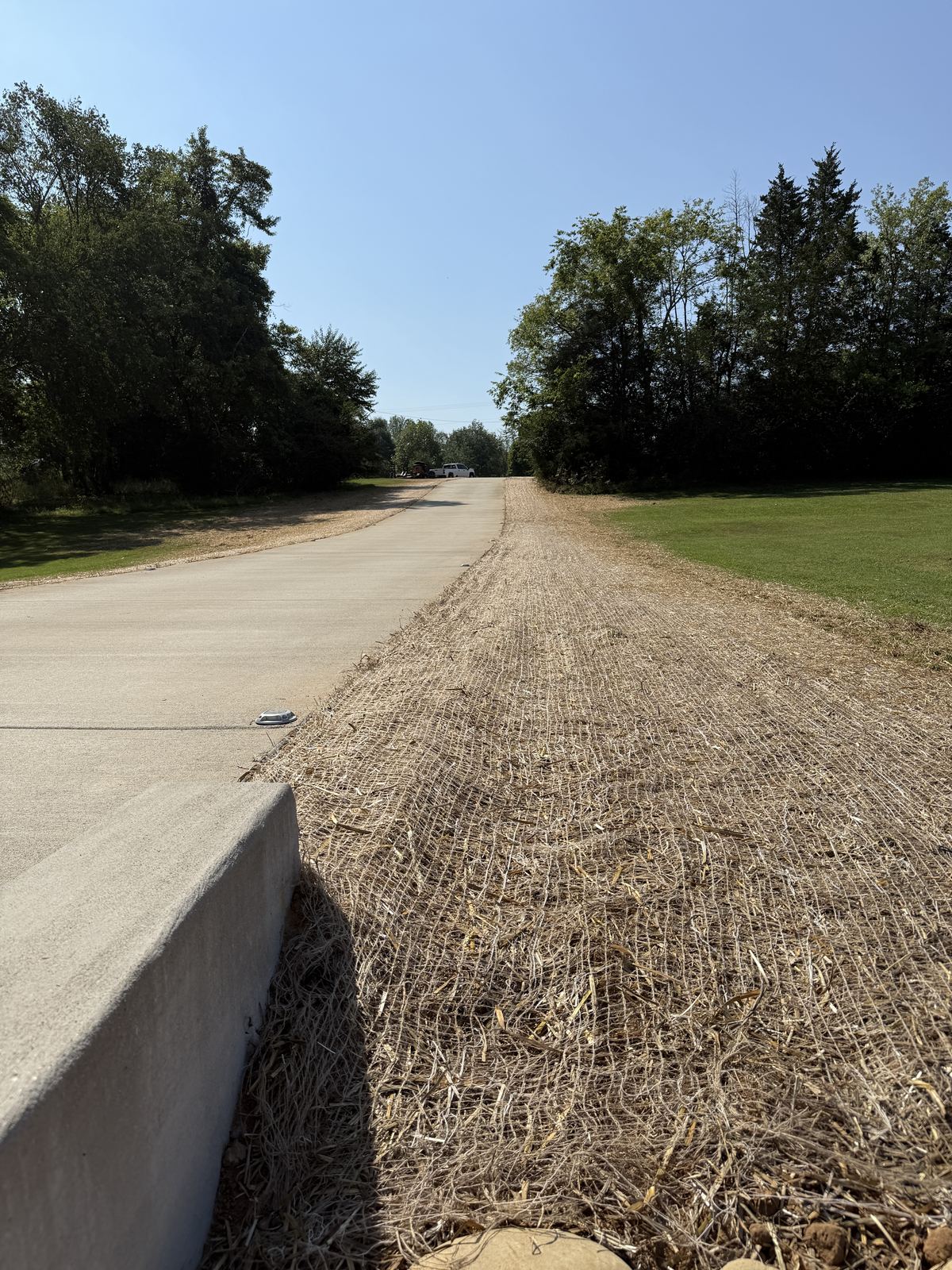
The drive crosses the ditch line in two places, each on a pair of culvert pipes with a concrete headwall. At the bottom of the pipes, someone had poured concrete aprons at the outlets. They didn't look good, and worse, they weren't sloped correctly — water leaving the pipes had nowhere clean to go, and a poorly pitched apron will pond water at the pipe or kick the flow sideways into the bank.
We cut and removed the concrete at the bottom of the crossover pipes, regraded the outlet areas so water drains out of the pipes and down the ditch line, and armored them with 7–14″ Pigeon River rock. Rounded river rock in that size range is heavy enough to stay put when the pipes are running full and breaks up the flow so it doesn't scour the ditch below — and it looks a whole lot better at the end of a new driveway than a cracked concrete slab.
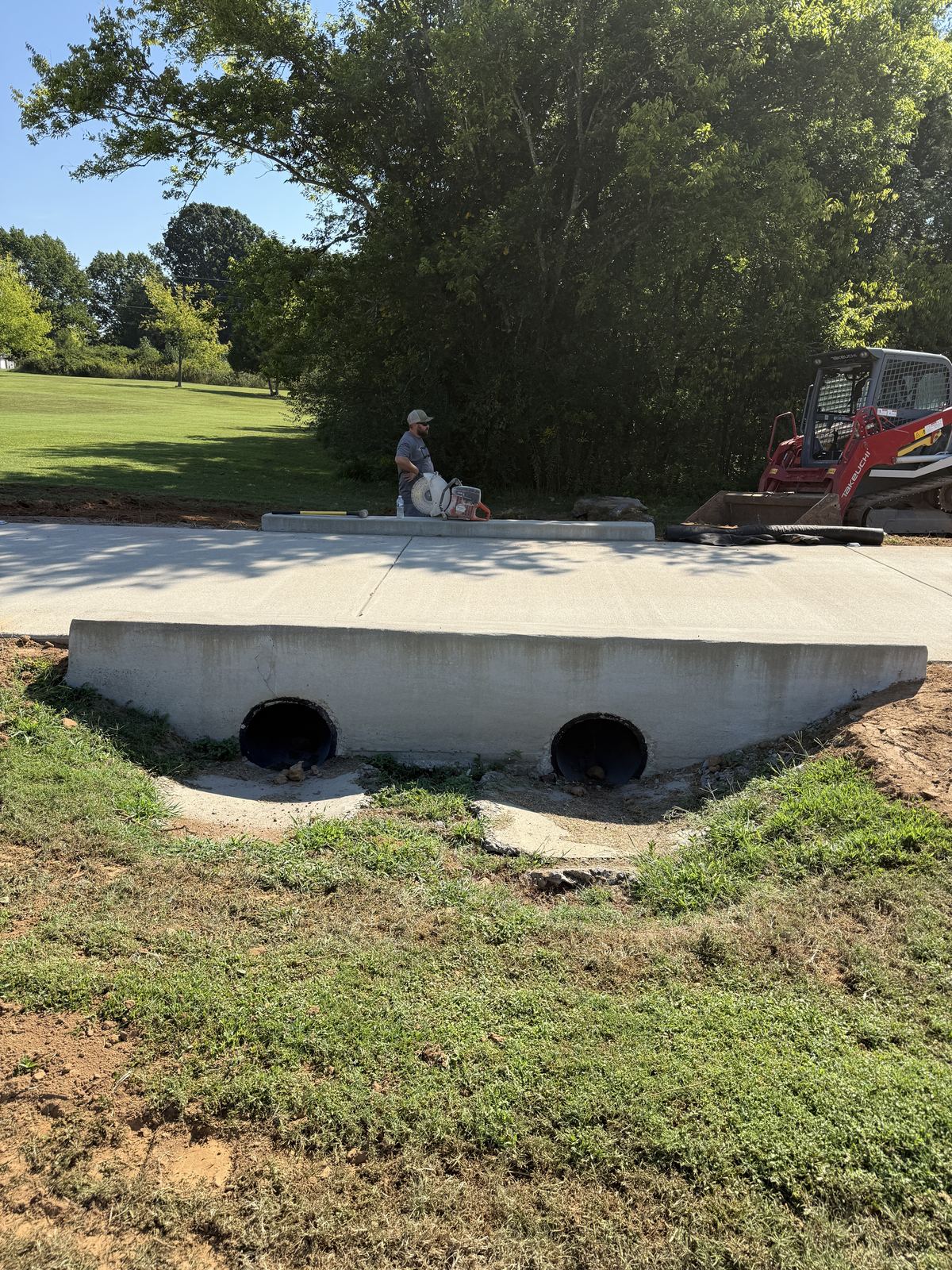
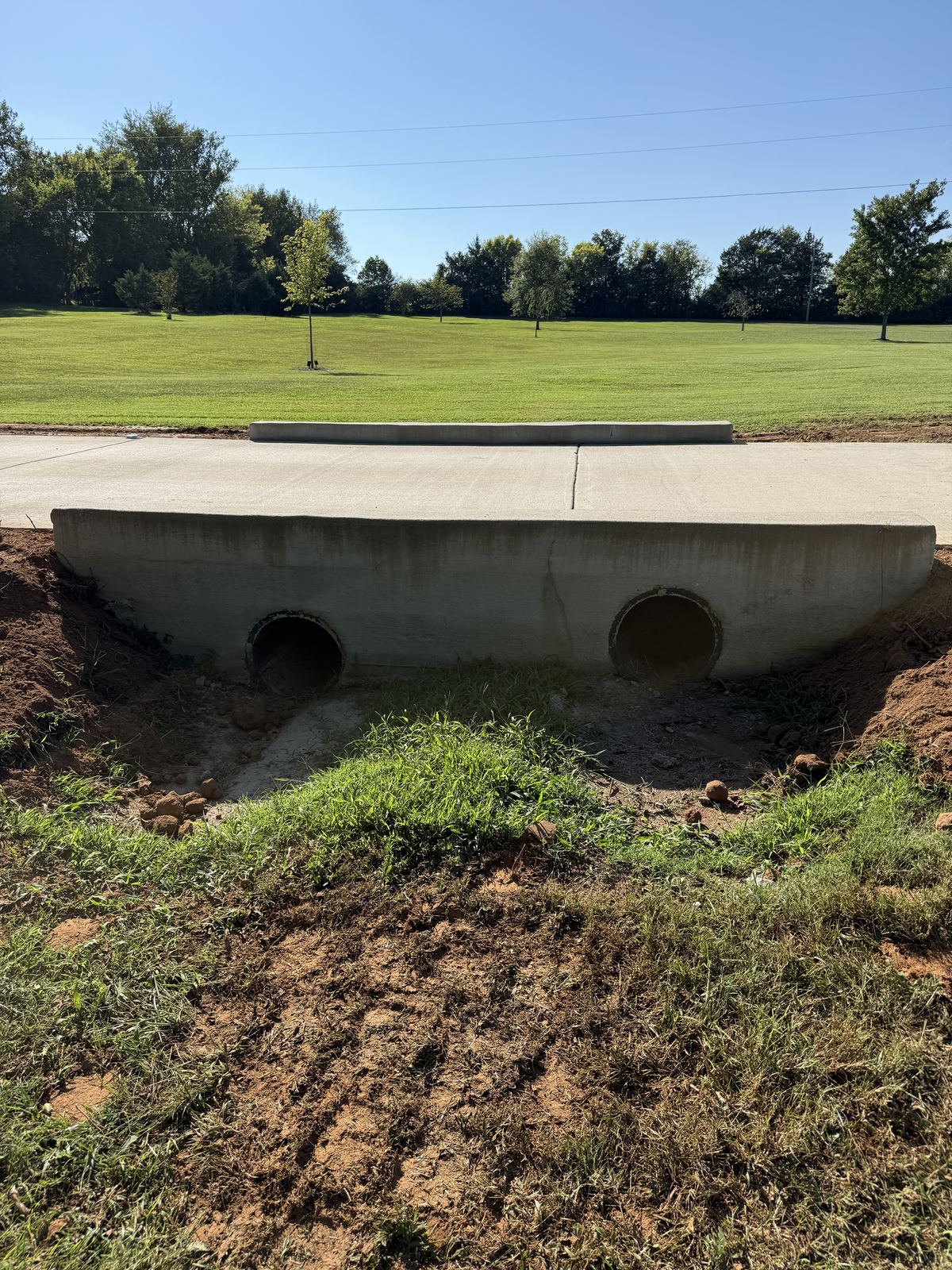
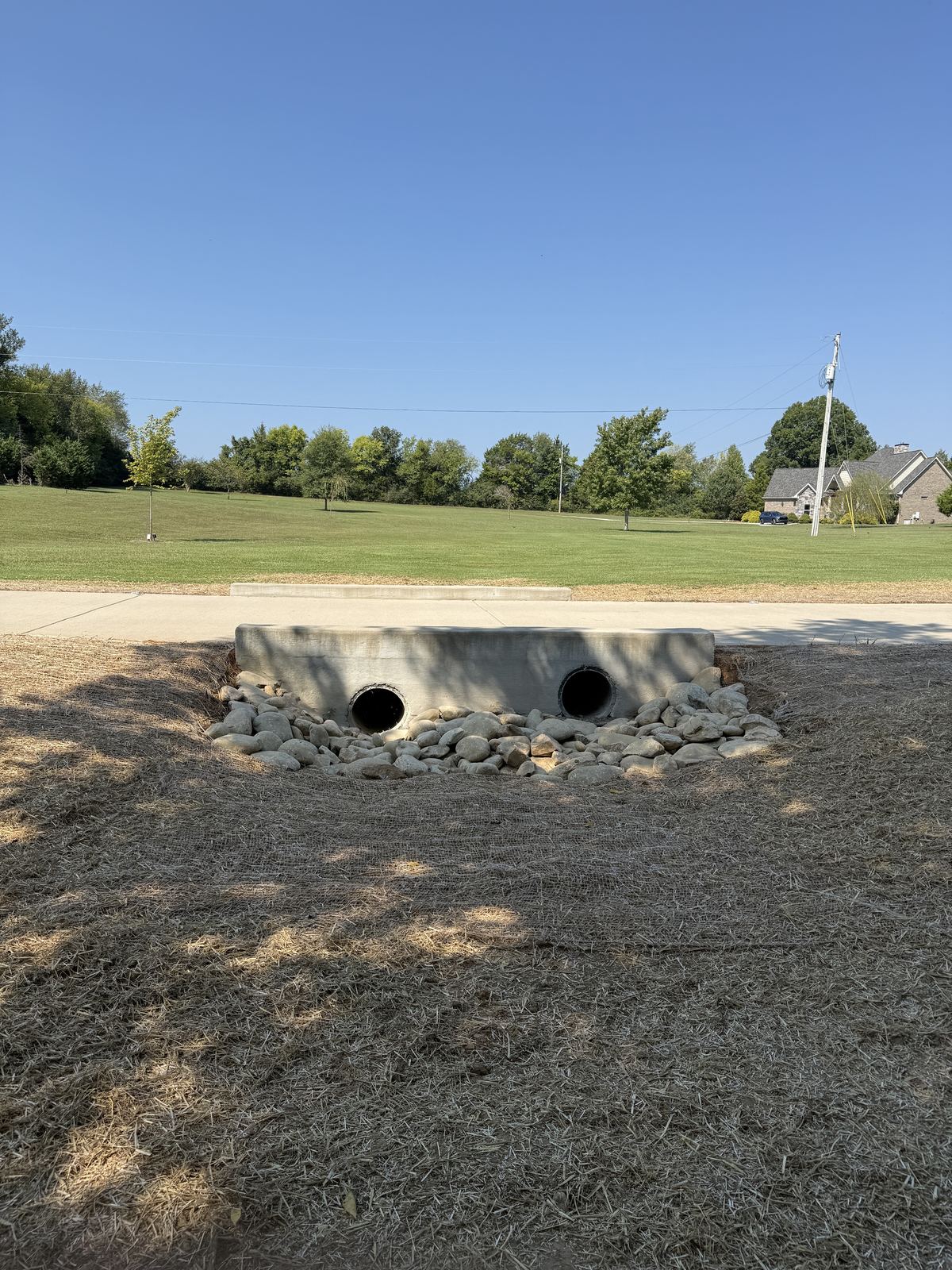
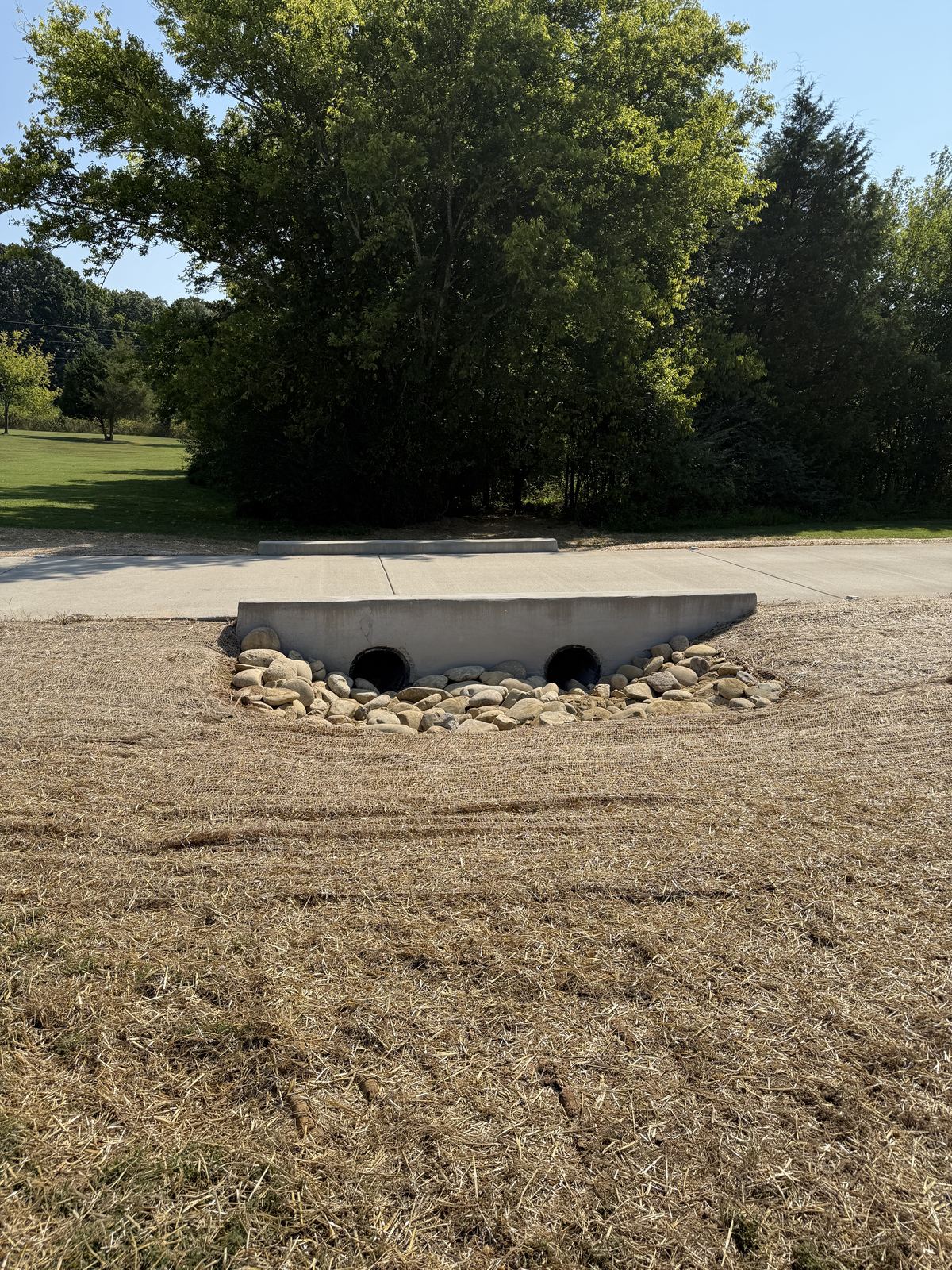
Ground flush to the concrete down both sides of a 500-foot drive, grass on its way in under matting and straw, and two culvert outlets that drain the way they should. The slab edge is supported, the runoff sheds away from it, and the homeowner has a driveway that looks like the job is actually done.
If your concrete crew is done and the ground along the drive is still sitting low, that's a call we take all the time. We grade back up to the edge, bring in topsoil, and finish it with seed, matting, and straw so it stays put. We also fix culvert and crossover pipe outlets that are washing out, holding water, or were finished poorly. More on how we approach it on our grading page and erosion control page.
Concrete contractors: if you'd rather hand off the grade-out than leave it to the homeowner, we're happy to be the sub who finishes behind you. We work Greenbrier, Springfield, White House, and the rest of Robertson County, along with Hendersonville, Gallatin, Goodlettsville, Millersville, Lebanon, and throughout Middle Tennessee.
Grade-outs, topsoil, seed & straw, culvert outlets — free estimates, straight quotes.