 Dunnebacke Constructors
Grading · Drainage · Erosion Control · Middle TN
Free Estimates · Call Now
(615) 887-1194
Dunnebacke Constructors
Grading · Drainage · Erosion Control · Middle TN
This gravel drive had thinned out to a two-track of dirt and grass, and the apron at the road had worn down into ruts. We cut it out, laid geofabric over the dirt, brought in a load of #57 stone and a load of crusher run, built a flat spot so the owners' camper could sit level, and rolled the entire drive.
Gravel driveways rarely fail because the stone wears out. They fail from the bottom. Every time a truck rolls over rock sitting directly on dirt, it pushes a little of that rock down into the soil, and the soil works its way up into the gaps. A few years of that and the stone is still there — it's just underneath the driveway instead of on top of it. What's left on the surface is mud, ruts, and grass growing right up the middle.
That's what was happening here. From the road you could see two worn wheel tracks with grass between them, and the drive had faded into the yard along both edges. Around Cross Plains and the rest of Robertson County, a lot of ground is clay that gets soft when it's wet, which speeds this up. Dumping another load of gravel on top would have looked good for a season and then gone the same way.
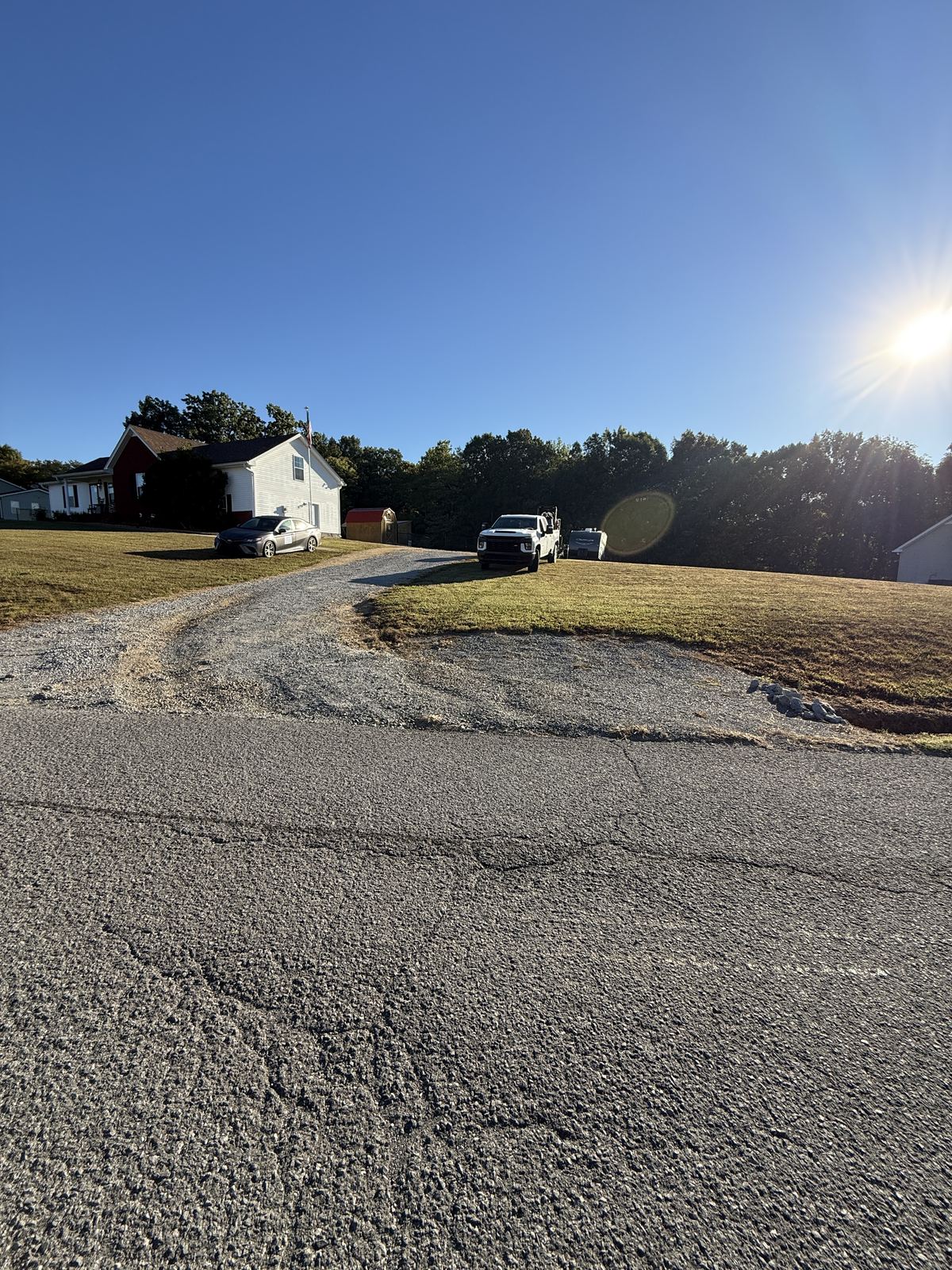
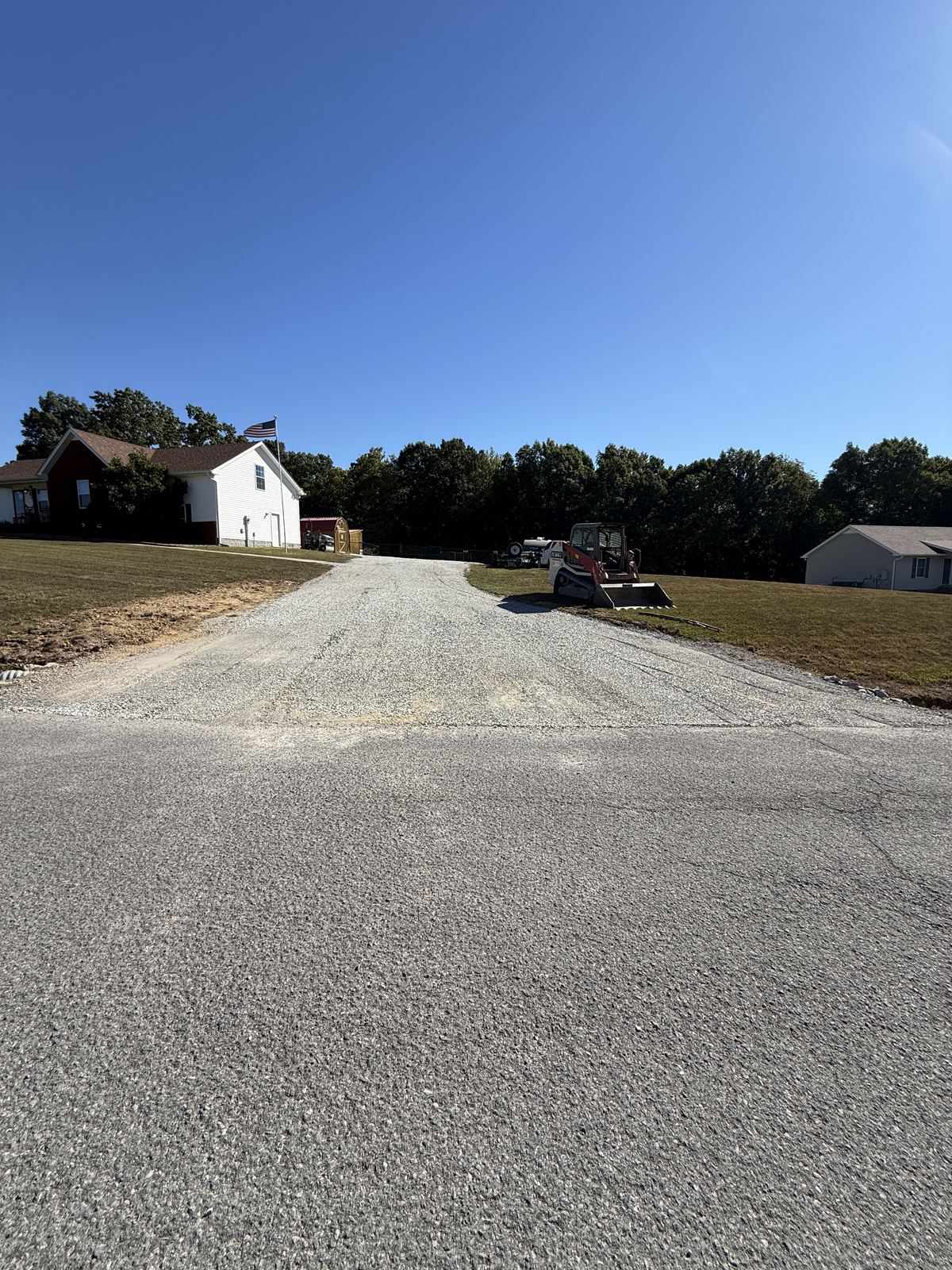
A gravel driveway that lasts comes down to keeping the rock and the dirt apart and locking the surface together. Here's how we went about it.
We cut out a little of the existing drive to clean up the shape and get rid of the grassy, soft material on top, so the new stone wasn't just sitting on the same problem.
Before any rock went down, we rolled out geotextile fabric over the bare dirt. The fabric is a separator: it stops the stone from being pushed down into the soil and stops the soil from pumping up into the stone. It's the single biggest reason a rebuilt gravel drive holds its shape instead of turning back into ruts.
We spread a load of #57 stone and a load of crusher run over the fabric. #57 is clean crushed stone with no fines, so water drains through it instead of sitting in the drive. Crusher run has the fines left in, which bind together under weight into a hard, tight surface that doesn't roll around under tires.
The owners needed a spot for their camper, so we built a flat area where it can sit level without blocking or jacking one side up. Then we rolled the entire drive, end to end, to lock the stone together and leave a firm, smooth surface.
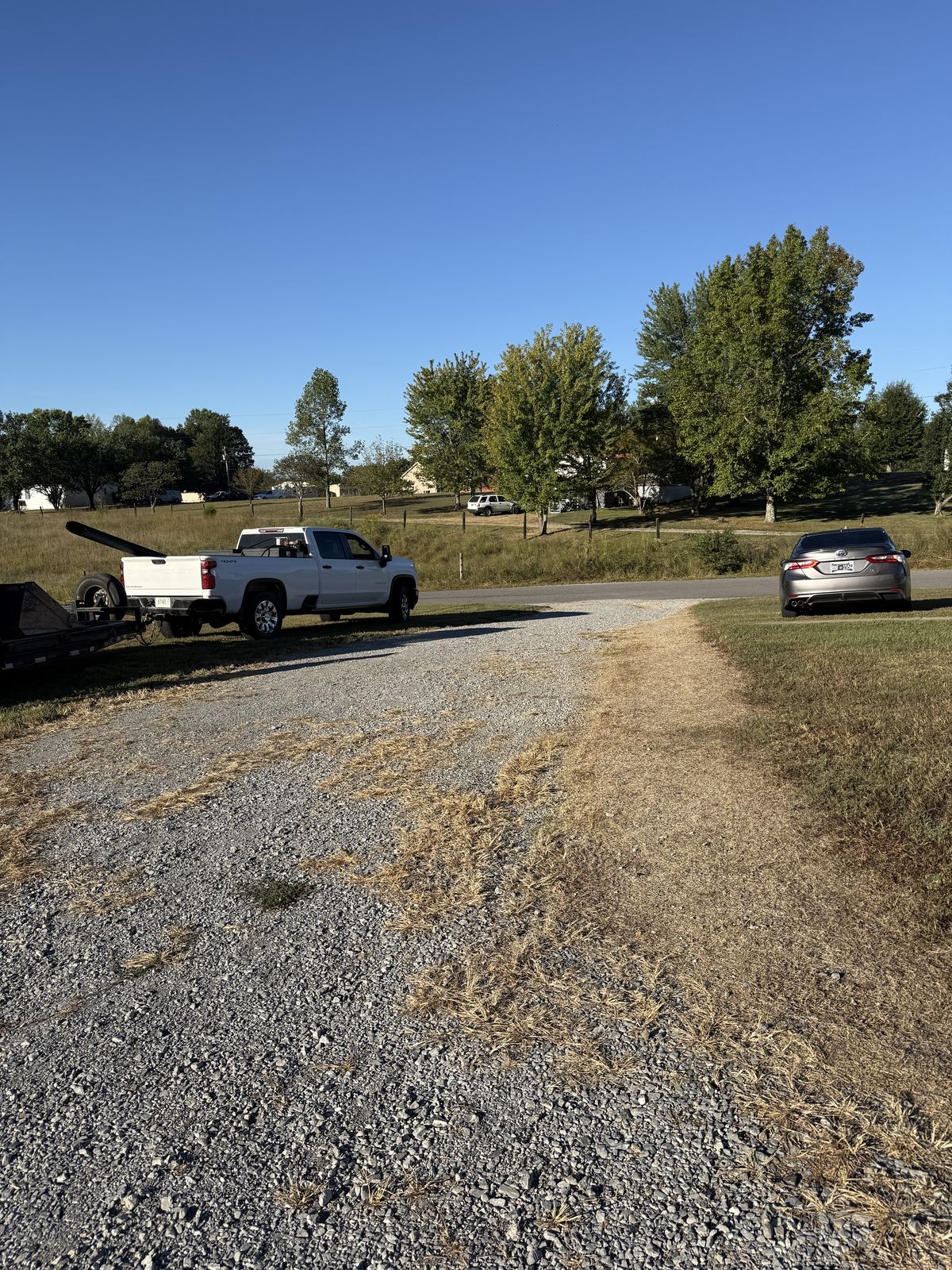
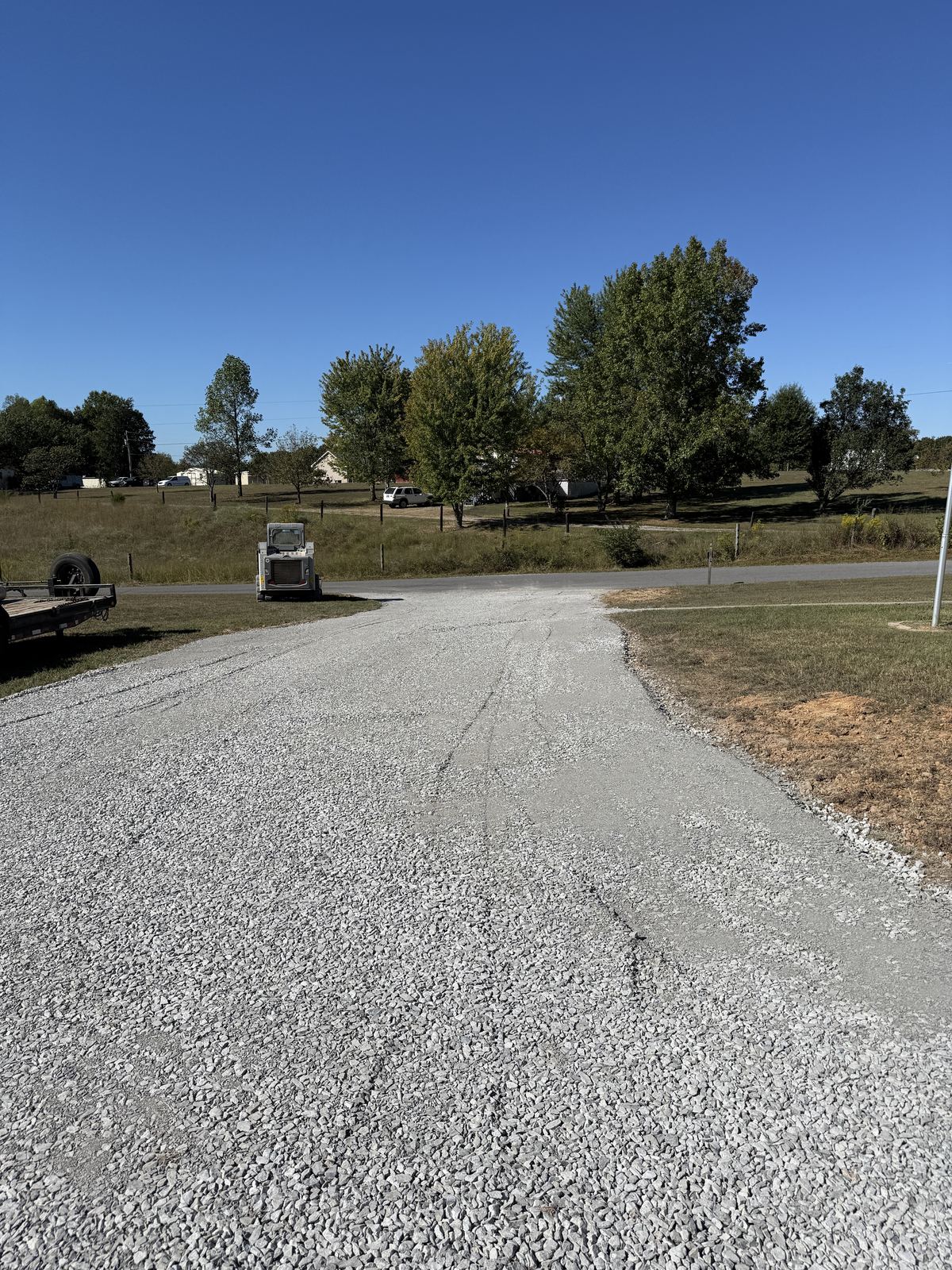
A full-width stone drive from the road to the house, a clean apron where it meets the pavement, a level place for the camper, and fabric underneath to keep the rock where it belongs. Rolled tight, it's ready for daily traffic and the weight of a camper coming and going.
If your gravel drive has ruts, grass up the middle, or mud showing through after every rain, more rock on top usually isn't the fix. We cut it back, put fabric down, rebuild it with the right stone, and roll it. We also build camper and RV pads, equipment pads, and parking areas. More on how we approach the ground work on our grading page.
We work Cross Plains, White House, Springfield, Greenbrier, and the rest of Robertson County, along with Hendersonville, Gallatin, Goodlettsville, Portland, and throughout Middle Tennessee. Every driveway is different, so pricing depends on the job — give us a call and we'll come take a look and give you a free quote.
Gravel driveways, camper pads, regrading — free estimates, straight quotes.